


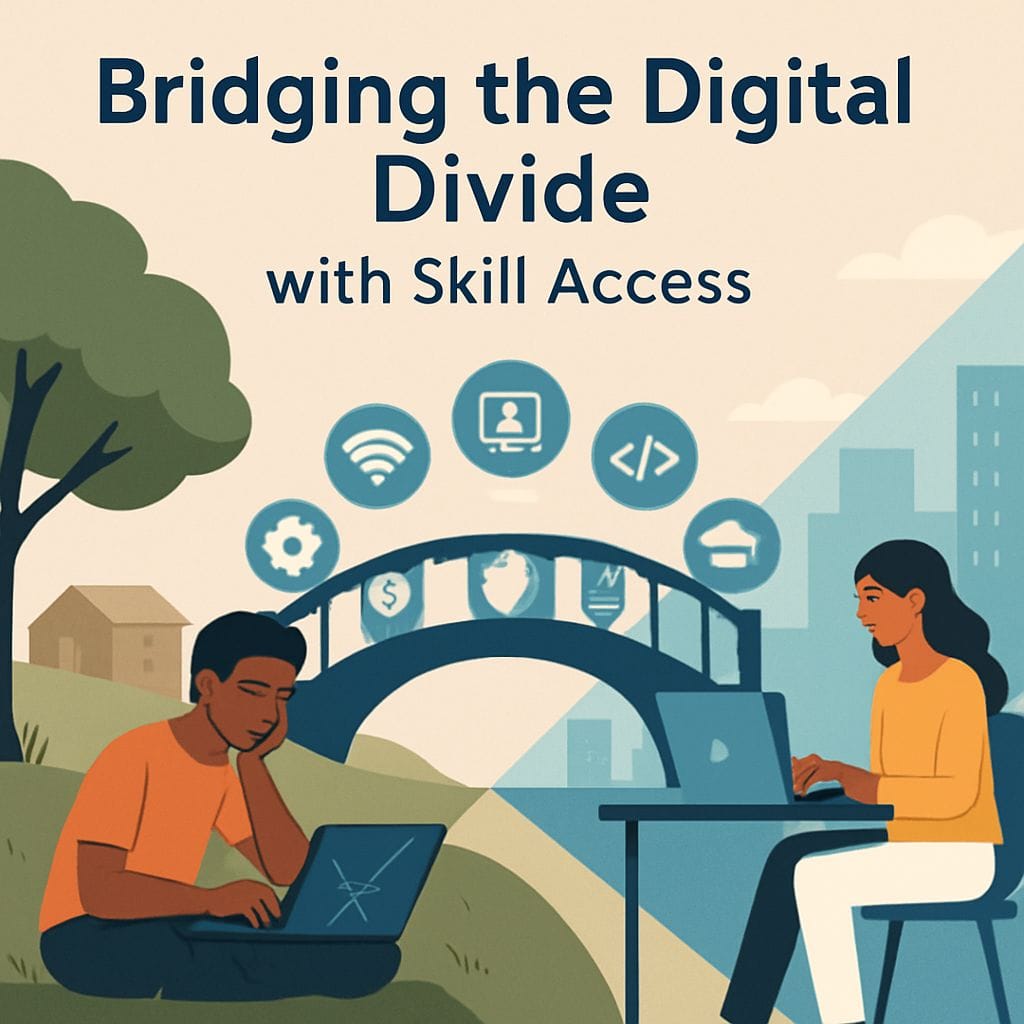
In an increasingly connected world, digital technology plays a central role in how we communicate, work, learn, and access opportunities. However, not everyone has equal access to these tools, a challenge known as the digital divide.
The digital divide goes beyond just internet access; it encompasses disparities in technology use, digital literacy, and access to skill development. In this post, we’ll break down what the digital divide really means, its causes and impact, and how access to digital skills can help bridge the gap.
What Is the Digital Divide?
The digital divide refers to the gap between individuals, households, communities, or regions that have access to modern information and communication technologies (ICTs), and those that don’t.
This divide can exist in several ways:
- Access to devices like computers, smartphones, or tablets
- Stable internet connectivity
- Digital literacy, knowing how to use technology effectively
- Access to training or learning platforms to build digital skills
The divide often reflects and reinforces existing inequalities including income levels, education, geography (urban vs. rural), gender, and age.
Causes of the Digital Divide
Several factors contribute to this growing gap:
1. Infrastructure Gaps
In many rural or underserved regions, there’s limited access to broadband internet or reliable electricity, making it difficult to use digital tools consistently.
2. Cost Barriers
The cost of smartphones, laptops, data, and subscriptions can be prohibitive, especially for low-income households.
3. Educational Inequality
Many people never receive formal instruction on how to use digital tools, leaving them behind in a world that assumes tech literacy.
4. Lack of Awareness
Some individuals are unaware of the opportunities that digital skills can offer — whether for learning, career development, or income generation.
5. Social and Cultural Factors
In some societies, gender, age, or social status may limit one’s exposure to digital tools or training, particularly for women and youth.
Why the Digital Divide Matters
The digital divide is more than just a tech issue, it’s a social and economic challenge. When people lack digital access and skills, they may:
- Miss out on job opportunities or remote work
- Be excluded from online education
- Struggle to access healthcare, banking, or government services
- Have limited ability to participate in the digital economy
- Be underrepresented in tech-driven innovation
In short, the divide widens existing inequalities, leaving already marginalized groups further behind.
How Digital Skills Can Bridge the Gap
While improving infrastructure and affordability are crucial, equipping people with relevant digital skills is one of the most powerful ways to close the divide.
Here’s how:
1. Empowerment through Education
Teaching individuals how to use tools like email, search engines, and mobile apps can improve their ability to access resources, apply for jobs, or even start businesses.
2. Creating Income Opportunities
With skills in digital marketing, web development, UI/UX design, content creation, and more, people can freelance, work remotely, or build digital products often from anywhere.
3. Increasing Participation in the Digital Economy
When more people understand how to use digital platforms, they can engage more fully, whether in e-commerce, education, innovation, or civic engagement.
4. Reducing Youth Unemployment
Young people equipped with digital skills are better positioned to adapt to the future of work and navigate a tech-driven world.
5. Enabling Lifelong Learning
Digital literacy opens the door to continuous self-education, allowing people to adapt as technology evolves.
Community-Based Solutions and Initiatives
Several grassroots and global initiatives are helping bridge the digital divide through accessible training, including:
- Digital skill academies and hubs offering beginner-to-advanced training
- Partnerships with local schools or communities to provide devices or training
- Scholarships or low-cost learning options for underserved populations
- Mentorship programs connecting learners with digital professionals
Organizations like Grapat Digital Hub also play a vital role by making tech training more accessible in emerging communities.
In Conclusion
The digital divide is not just about who has internet access, it’s about who has the opportunity to thrive in a digital world.
By providing access to affordable, practical, and inclusive digital skills training, we can move toward a more equitable society where everyone, regardless of background or location, has the chance to learn, grow, and participate fully in the modern economy.
Bridging the gap starts with awareness, continues with access, and is sustained by education.